
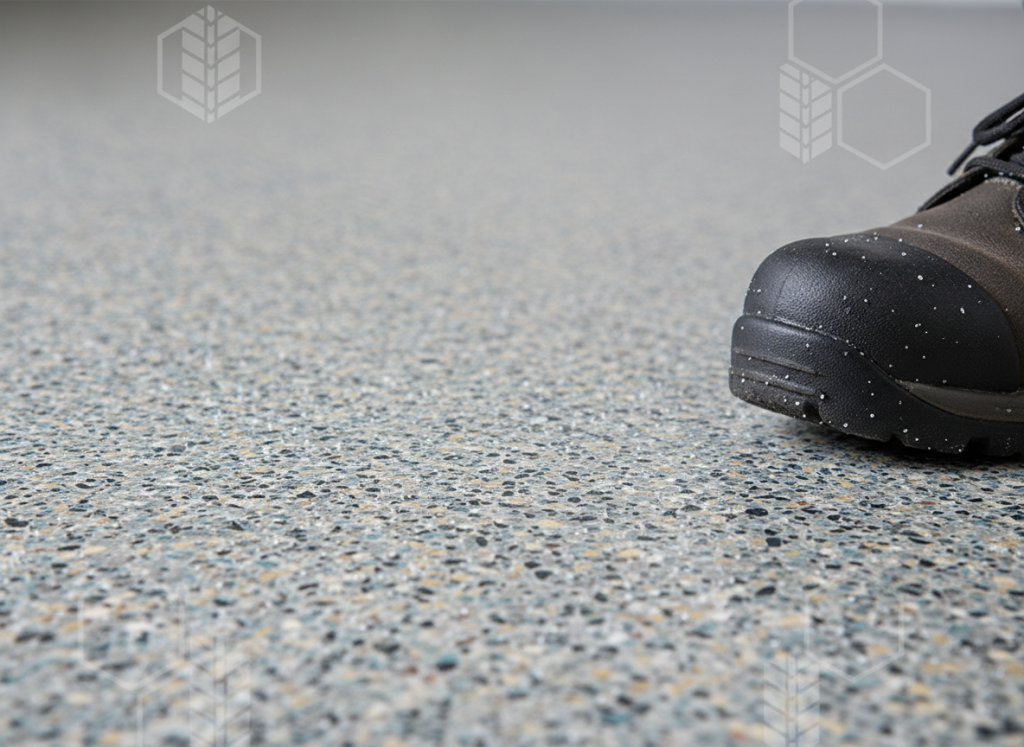
A slip resistant floor coating is a coating system designed to improve traction underfoot—especially in areas that get wet, dusty, or see frequent foot traffic. With epoxy and flake floors, slip resistance is usually achieved by combining surface texture (flake + profile) with an anti-slip additive in the topcoat.
The goal is simple: better grip without turning the floor into sandpaper.
Shop: Anti-Slip Additives | Clear Topcoats | Epoxy Flake Kits
What Makes a Floor Slip Resistant?
Slip resistance comes from texture and surface design, not just the coating chemistry.
Common ways to add traction:
- Vinyl flake texture (partial or full flake broadcast)
- Anti-slip additive mixed into the clear topcoat
- Broadcast grit into a wet coat (then sealed)
- Textured rollers / application methods (system-dependent)
The right approach depends on:
- wet vs dry conditions
- barefoot vs shoes
- cleaning requirements
- how aggressive you can be with texture
Anti-Slip Additives (What They Are)
Anti-slip additives are traction media added to a coating to create micro-texture. Common types include:
Polymer / Rubberized Grit (Comfort Traction)
- Softer feel underfoot
- Good for residential garages and entry areas
- Easier to clean than very sharp aggregate
- Lower “bite” than mineral grit
Aluminum Oxide (Maximum Traction)
- Very aggressive traction
- Great for ramps, steps, and heavy-use areas
- More durable under abrasion
- Can be harder to clean and rougher on knees/hands
Silica / Sand (Budget Traction)
- Common and effective
- Can vary in consistency
- Can be harder to keep uniform if not applied correctly
If you tell me what additive you sell, I’ll rewrite this section to match your exact product and positioning.
Slip Resistance Ratings (What to Know)
Slip resistance can be measured using different standards. The most common concepts you’ll see are:
- COF (Coefficient of Friction) — higher generally means more traction
- Wet vs dry testing — wet traction is what matters in most “slip risk” areas
- Specified environments — kitchens, pool decks, ramps, commercial entries all have different needs
Important: ratings depend on the entire system:
- substrate texture
- flake density
- additive type and amount
- topcoat film build
- contamination (dust, oils, soaps)
- maintenance and cleaning method
If you have published test data for your additive/topcoat system, I can format it into a clean spec block.
Where Slip Resistant Coatings Make Sense (Use Cases)
Garages
- Good for: entry/threshold zones, areas that get water from vehicles
- Common approach: flake + light additive in topcoat (balanced traction)
Workshops / Shops
- Good for: sawdust, dust, frequent foot traffic
- Approach: medium traction additive, prioritize cleanability
Commercial Entries & Back-of-House
- Good for: wet shoes, spills, frequent cleaning
- Approach: traction additive + durable clear topcoat
Ramps, Steps, and Sloped Areas
- High slip risk
- Approach: more aggressive additive (often aluminum oxide) + durable topcoat
Pool / Wet Areas (System Dependent)
- Requires careful system selection and maintenance planning
- Prioritize wet traction + chemical resistance
How to Add Slip Resistance to an Epoxy Flake Floor
Option 1: Additive in the Clear Topcoat (Most Common)
- Mix additive into the topcoat at the recommended rate
- Roll evenly and maintain a wet edge
- Best for: consistent traction with a clean finished look
Option 2: Broadcast Grit Into a Wet Coat (Then Seal)
- Broadcast traction media into a wet coat
- Let it set, then seal with another clear coat
- Best for: higher traction needs (ramps/steps)
Option 3: Let Flake Texture Do the Work (Light Traction)
- Partial/full flake provides some texture
- Best for: low-risk areas where you want easier cleaning
Choosing the Right Traction Level (Don’t Overdo It)
Too little traction = slip risk.
Too much traction = hard to clean, uncomfortable, traps dirt.
A practical way to choose:
- Light traction: garages, dry areas, easy cleaning priority
- Medium traction: workshops, commercial back-of-house
- High traction: ramps, steps, wet entries, safety-first zones
If you tell me the typical customer (DIY garage vs contractor/commercial), I’ll tune the recommendations to match.
FAQs
Does slip resistance make floors harder to clean?
Usually yes—the more aggressive the texture, the more it can hold dirt. The goal is balanced traction for the environment.
Can I add anti-slip additive to polyaspartic topcoat?
Yes. Many systems add traction media to polyaspartic clear coats for flake floors, especially in garages and commercial areas.
Will anti-slip additive change the look?
It can slightly reduce gloss and add a subtle texture. The effect depends on additive type and loading rate.
Where should I add slip resistance?
High-risk zones first: entries, ramps, steps, and areas that get wet. You can also do “zoned traction” (only in certain areas).
Ready to Add Traction?
Shop: