
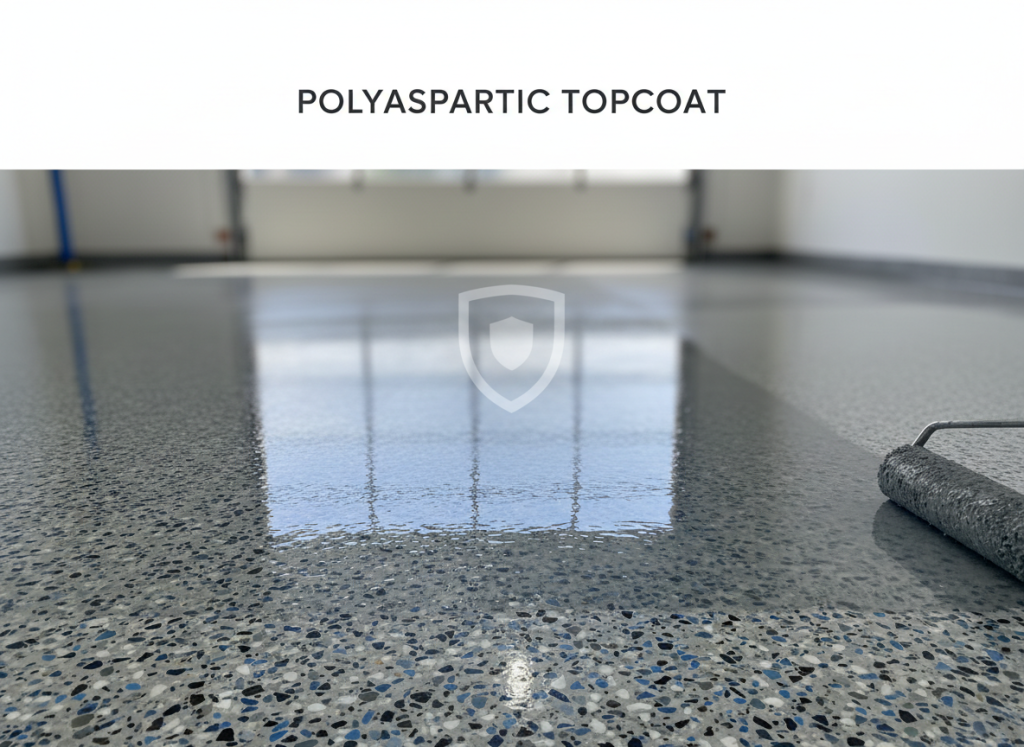
A polyaspartic topcoat is a high-performance clear coat used to seal and protect epoxy flake floors. It’s popular because it cures fast, holds up well in traffic, and offers better UV stability than many basic clear coats—making it a strong choice for garages and spaces with sunlight exposure.
If your flake floor needs a tough wear layer with a clean finish, polyaspartic is often the right topcoat.
Shop: Polyaspartic Topcoats | Epoxy Flake Kits | Vinyl Flake Chips
What Is a Polyaspartic Topcoat?
Polyaspartic is a type of protective coating commonly used as the final wear layer over:
- Epoxy flake floors
- Solid-color epoxy floors
- Decorative quartz systems (system-dependent)
Its job is to:
- Seal the flakes and create a cleanable surface
- Protect against abrasion and everyday wear
- Improve chemical resistance (varies by product)
- Reduce UV-related yellowing compared to many standard clears
UV Stability (Why It Matters)
UV exposure can cause some clear coats to:
- yellow over time
- lose clarity
- change the look of light-colored blends
A polyaspartic topcoat is often chosen for:
- garages with the door open often
- sunlit shop floors
- entryways and areas near windows
Note: “UV stable” doesn’t mean “UV proof.” It means better resistance to yellowing and degradation compared to less UV-resistant clears.
Cure Time & Return to Service
One of the biggest advantages of polyaspartic is fast cure. That matters when:
- you want a quicker return to foot traffic
- you need less downtime for a shop or commercial space
- you’re installing in tighter time windows
Cure time depends on:
- temperature and humidity
- product chemistry
- film thickness
- ventilation
If you tell me your product’s typical cure window (walk-on / drive-on), I’ll add exact numbers here.
Pros and Cons of Polyaspartic Topcoats
Pros
- Faster cure than many traditional clears
- Better UV stability for sun-exposed areas
- Strong wear layer for abrasion resistance
- High clarity that makes flake blends pop
- Can be used in one or two coats depending on the build
Cons
- Shorter working time (you need to move efficiently)
- Can be less forgiving for DIY installs if you’re not prepared
- Surface prep between coats matters (timing + recoat window)
- Some products can show roller marks if applied incorrectly
- Typically higher cost than basic clears
When to Choose Polyaspartic vs Other Clears
Choose polyaspartic when you want:
- UV resistance for garages and sunlit areas
- fast return to service
- a tougher wear layer for higher traffic
Other clear options may be fine when:
- the space has minimal UV exposure
- you’re optimizing for longer working time
- the system spec calls for a different chemistry
Application Notes (High-Level)
A clean polyaspartic finish depends on:
- Proper scrape/vacuum after flake broadcast
- A grout/build coat when needed (especially full flake)
- Correct mixing and consistent application
- Staying inside the recoat window for best intercoat adhesion
- Optional anti-slip additive where needed (ramps, wet areas)
FAQs
Do I need a polyaspartic topcoat over epoxy flakes?
If the floor gets sunlight or you want faster cure and durability, polyaspartic is a strong choice. It’s commonly used as the final wear layer.
Will polyaspartic yellow?
Polyaspartic is generally more UV stable than many clears, but no coating is completely immune to UV effects. Product quality and exposure level matter.
Can I apply polyaspartic over epoxy?
Yes—polyaspartic is commonly applied over epoxy systems, including flake floors, when the surface is properly prepared and within the recoat window.
How many coats of polyaspartic do I need?
Many systems use one coat, but higher traffic floors may benefit from two coats or a thicker build depending on the spec.
Ready to Seal Your Flake Floor?
Shop: