
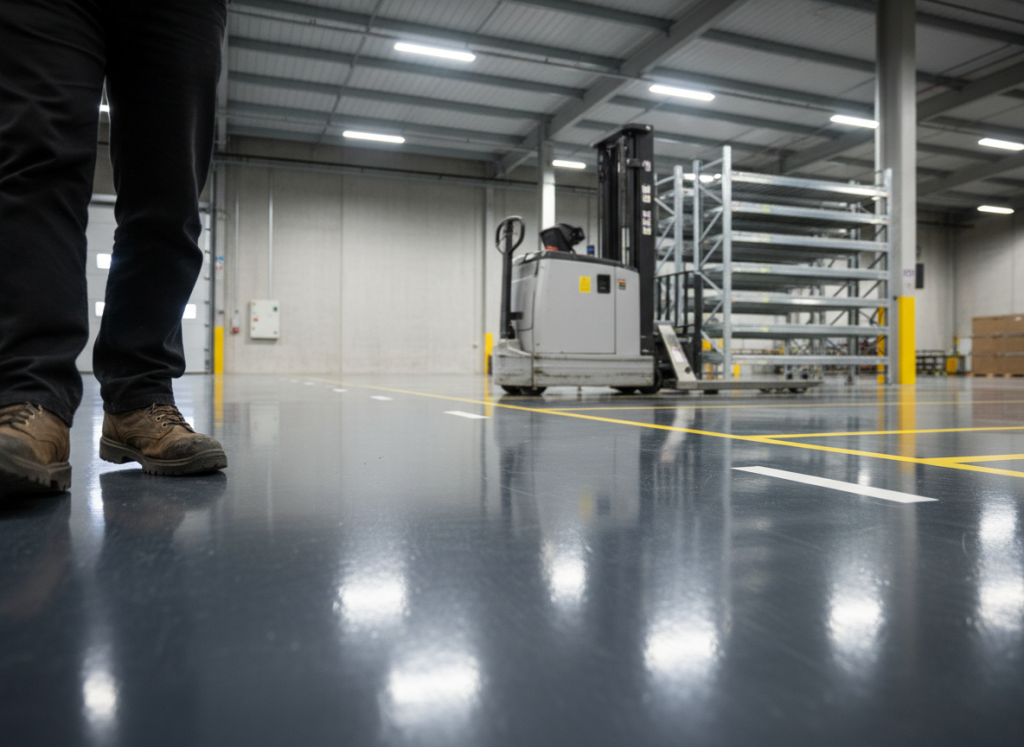
Commercial and industrial epoxy flooring gives you a durable, cleanable surface built for daily traffic, equipment, and real-world mess. The right system can handle forklifts, carts, chemicals, abrasion, and constant cleaning—while still looking professional for customers and staff.
This page covers use cases, what drives durability, and how to plan for maintenance so the floor lasts.
Related: Epoxy Flake Floor Systems | Concrete Prep for Epoxy | Polyaspartic Topcoat | Anti-Slip / Slip Resistant Floor Coating
Where Commercial / Industrial Epoxy Flooring Works Best (Use Cases)
Epoxy systems are commonly used in:
Warehouses + Light Manufacturing
- pallet jacks, forklifts, staging areas
- marked lanes and work zones
- dust reduction vs bare concrete
Auto Shops + Service Bays
- oil, grease, brake fluid, cleaners
- hot tire pickup resistance depends on system + prep
- easier cleanup and a more professional look
Retail + Showrooms
- clean, bright finish
- consistent appearance and easy mopping
- optional flake for texture and dirt hiding
Restaurants + Commercial Kitchens (System-dependent)
- frequent washdowns
- grease exposure
- slip resistance is critical
Note: these installs often require specific coatings and detailing. Match the system to the environment.
Medical / Labs (System-dependent)
- cleanable surfaces
- chemical resistance requirements
- seamless details and cove base may be needed
Gyms + Fitness Facilities
- sweat, rubber marks, heavy equipment
- easy cleaning
- optional slip resistance and matte finishes
Schools + Public Buildings
- high foot traffic
- easy maintenance
- long recoat cycles
What “Durability” Really Means (And What Controls It)
Durability isn’t one thing—it’s a mix of performance factors. The best commercial floors are designed around your actual traffic and cleaning routine.
1) Concrete Prep (Bond Strength)
Most failures are adhesion failures. If the slab isn’t properly profiled and cleaned, even premium coatings can peel.
Best practice: mechanical prep (grinding) + moisture evaluation.
Learn more: Concrete Prep for Epoxy
2) System Build (Thickness + Layers)
Heavier-duty spaces usually need:
- stronger base coat
- optional broadcast layer (flake, quartz, or traction media)
- protective clear topcoat
More build = more wear layer = longer service life.
3) Abrasion Resistance (Wear)
High-traffic aisles, turning zones, and loading areas wear faster. A tougher topcoat and planned maintenance cycle matter more than “extra gloss.”
4) Impact + Point Loads
Dropped tools, rolling toolboxes, pallet jacks, and racks create point loads. The system needs the right hardness/toughness balance to resist chipping.
5) Chemical Resistance
Different spaces need different resistance:
- oils/grease
- cleaners/degreasers
- mild acids/alkalis
- solvents (higher risk)
If you tell me the chemical list, I’ll help you spec the right coating family and topcoat type.
6) Slip Resistance (Safety)
Commercial floors often need traction—especially entries, ramps, kitchens, wash bays, and wet zones.
Learn more: Anti-Slip / Slip Resistant Floor Coating
System Options (Common Commercial Approaches)
Epoxy + Flake (Great All-Around Commercial)
Best for:
- retail, showrooms, lobbies, offices, many shops
Benefits: - looks clean and finished
- hides dirt well
- easy to maintain
Related: Epoxy Flake Floor Systems | Full Flake Epoxy Floor
Solid Color Epoxy (Simple + Functional)
Best for:
- warehouses, back-of-house, utility areas
Benefits: - cost-effective
- easy touch-ups
- clean look with line striping options
Fast-Return Topcoats (Downtime Matters)
If you need a quicker return to service, a high-performance clear topcoat can reduce downtime and improve wear resistance.
Related: Polyaspartic Topcoat
Maintenance: How to Keep Epoxy Floors Looking Good
A commercial epoxy floor lasts longer when maintenance is planned, not reactive.
Daily / Weekly (Basic)
- dust mop or sweep to remove grit (grit is sandpaper)
- auto-scrub or mop with a pH-neutral cleaner
- wipe spills quickly (especially oils/chemicals)
Monthly / Quarterly (Traffic Dependent)
- deep scrub high-traffic lanes
- inspect turning zones and entry points
- check for worn topcoat in aisles and near doors
Long-Term: Recoat Strategy
Most commercial floors don’t “fail” all at once—they wear down in the topcoat first.
A planned recoat:
- restores gloss/traction
- refreshes chemical resistance
- extends system life without full removal
If you want, I can add a simple “Recoat vs Replace” decision block for this page.
Planning Checklist (Before You Choose a System)
To pick the right commercial/industrial epoxy floor, define:
- traffic type (foot, carts, forklifts)
- turning zones and point loads
- chemical exposure list
- wet areas (need traction)
- downtime window (overnight vs weekend)
- desired finish (gloss vs satin, flake vs solid)
- moisture risk (on-grade slabs)
FAQs
How long does commercial epoxy flooring last?
With proper prep and a maintenance/recoat plan, commercial epoxy systems can last for years. Traffic level, chemicals, and cleaning habits control lifespan.
Is epoxy flooring good for forklifts?
It can be, if the slab is properly prepped and the system is built for the load and turning zones. High-wear lanes may need thicker build and a tougher topcoat.
Is epoxy flooring slippery when wet?
It can be if installed as a smooth gloss surface. Add traction media in wet zones and entries to improve slip resistance.
What’s the easiest way to maintain epoxy floors?
Remove grit often and use a pH-neutral cleaner. Grit and harsh chemicals shorten topcoat life.
Ready to Spec a Commercial Floor System?
If you tell me:
- your space type (warehouse/shop/retail/etc.)
- traffic (forklifts? pallet jacks?)
- any chemicals
- wet zones