
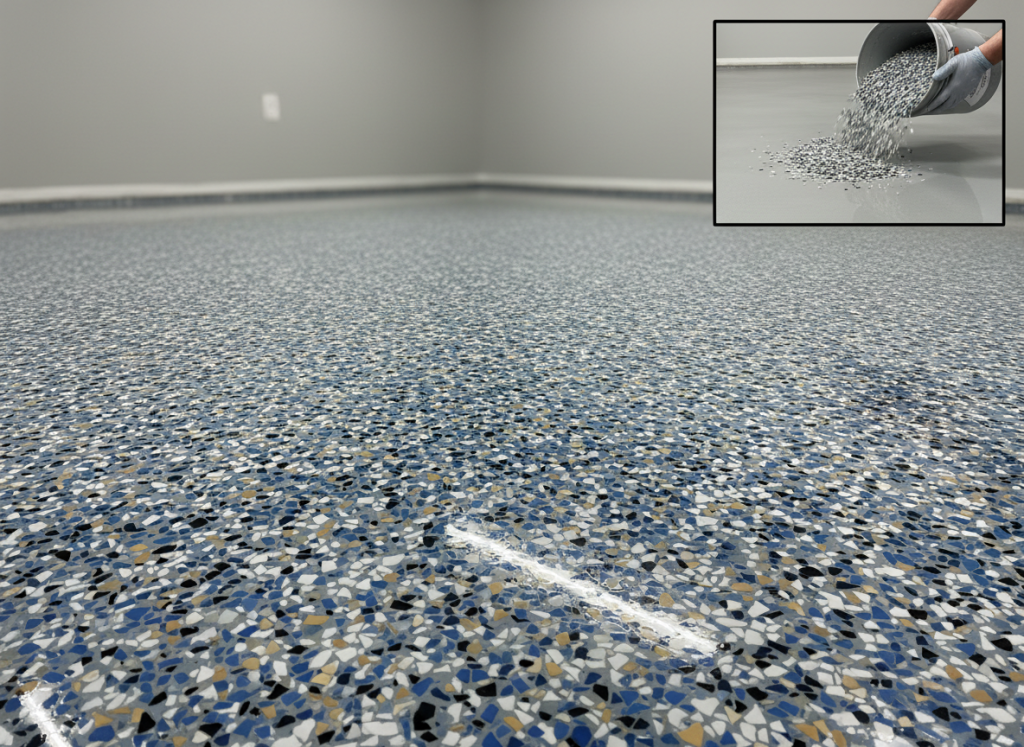
A full flake epoxy floor is a broadcast flake system where vinyl chips are applied to refusal (full coverage) over a wet epoxy base coat. The result is a dense, uniform finish that hides the base coat, adds texture, and looks premium—then gets sealed under a clear topcoat for durability.
This is one of the most popular builds for:
- High-end garage floors
- Workshops and man caves
- Retail back rooms and storage areas
- Light commercial and industrial spaces
Shop: Epoxy Flake Kits | Vinyl Flake Chips | Clear Topcoats
What “Full Flake” Means
“Full flake” means the flakes are broadcast until the floor won’t accept more—so the surface is fully covered. Compared to partial flake, full flake typically:
- Looks more uniform and “finished”
- Hides imperfections better
- Requires more flakes and cleanup (scrape/vacuum)
- Often uses a grout/build coat before the final clear topcoat
Full Flake Epoxy Floor Process (Step-by-Step)
Step 1) Concrete Prep (Non-Negotiable)
Full flake systems depend on bond strength. Prep should include:
- Mechanical grinding to the correct profile
- Removing dust, oils, sealers, and contaminants
- Crack/spall repair and patching
- Moisture evaluation (high moisture can cause failure)
If the slab isn’t prepped correctly, the coating can peel—no matter how good the products are.
Step 2) Masking + Detail Work
Before coating:
- Tape walls, door thresholds, and transitions
- Protect baseboards and vertical surfaces
- Plan your exit path so you don’t paint yourself into a corner
Step 3) Primer (Optional)
Primer is often used to:
- Improve adhesion on porous concrete
- Reduce outgassing bubbles
- Help the base coat lay down more evenly
Step 4) Epoxy Base Coat
Apply the epoxy base coat evenly and keep a wet edge. This layer:
- Bonds the system to the slab
- Holds the flakes in place
- Sets the foundation thickness for the build
Step 5) Broadcast Flake to Refusal (Full Coverage)
Broadcast vinyl flakes while the base coat is wet:
- Toss flakes upward and let them fall for even distribution
- Work in sections to maintain consistent coverage
- Keep broadcasting until the surface is fully covered
Full flake is material-heavy by design—plan extra flakes for waste and cleanup.
Step 6) Cure
Let the base coat cure fully before scraping. Cure time depends on product chemistry and site conditions.
Step 7) Scrape + Vacuum
After cure:
- Scrape the surface to knock down sharp edges and high points
- Vacuum thoroughly to remove loose flakes
- Inspect for thin spots and touch up if needed
This step directly impacts how smooth the final floor feels and how clean the clear coat looks.
Step 8) Grout Coat / Build Coat
A grout/build coat:
- Locks down flake edges
- Fills voids between flakes
- Creates a sealed surface for the topcoat to build on
This is a key step for better cleanability and a more uniform final finish.
Step 9) Clear Topcoat (Wear Layer)
Seal the system with a clear topcoat. This layer controls:
- Gloss level (matte/satin/gloss)
- UV stability (important for sunlit garages)
- Chemical and abrasion resistance
- Cure time and return-to-service speed
Many full flake systems use a polyaspartic clear topcoat for fast cure and UV performance.
Materials List (Full Flake System)
A typical full flake epoxy floor build includes:
Surface Prep
- Diamond grinding tools (or grinder rental)
- Crack repair material / patch compound
- Vacuum (HEPA recommended)
- Solvent/cleaner as needed (job-dependent)
- Masking tape + plastic/paper
Coating System
- Primer (optional)
- Epoxy base coat
- Vinyl flake chips (enough for full broadcast)
- Grout/build coat (clear or pigmented, system-dependent)
- Clear topcoat (polyaspartic or epoxy clear)
Optional Add-Ons
- Anti-slip additive (for ramps, steps, wet areas)
- Pigmented edge coat (for stem walls or transitions)
- Second clear coat (for more build and longer wear)
If you tell me your product lineup (kit contents, flake bag sizes, topcoat options), I’ll turn this into a tight “Buy list” with exact quantities.
How Much Flake Do You Need for Full Flake?
It depends on:
- Flake size (fine vs medium vs large)
- Target density (true refusal vs heavy broadcast)
- Installer waste factor
Send me:
- square footage
- flake size
…and I’ll give you a clean target amount to publish on the page.
FAQs
Is full flake epoxy better than partial flake?
Full flake gives a more uniform look and hides imperfections better. It uses more material and takes more steps, but the finish is typically more premium.
Do I need a grout coat for full flake?
It’s strongly recommended for full flake. It locks down flake edges and improves cleanability before the final clear topcoat.
Can I do full flake without grinding the concrete?
Grinding is the standard for proper adhesion. Skipping mechanical prep is one of the most common reasons floors fail.
What topcoat is best for a full flake floor?
For fast cure and UV performance, polyaspartic is a common choice. The “best” option depends on sunlight, traffic, and chemical exposure.
Ready to Build a Full Flake Floor?
Shop:
- Epoxy Flake Kits
- Vinyl Flake Chips
- Clear Topcoats